Updated · 7 min read
How to Organize a Bedroom With No Closet: 10 Renter-Friendly Picks That Actually Hold a Wardrobe
Product buttons open current options and prices at the shop. Nothing here is sponsored. How we pick.
If your bedroom has no closet (common in older buildings, converted studios and some dorms), your clothes need somewhere to live besides a chair. These picks give you hanging space, drawer space and hidden storage without drilling, so you get your deposit back when you move out. Start with picks 1 and 3, then add the rest as your budget allows.
1. Freestanding Clothing Rack With Bottom Shelf
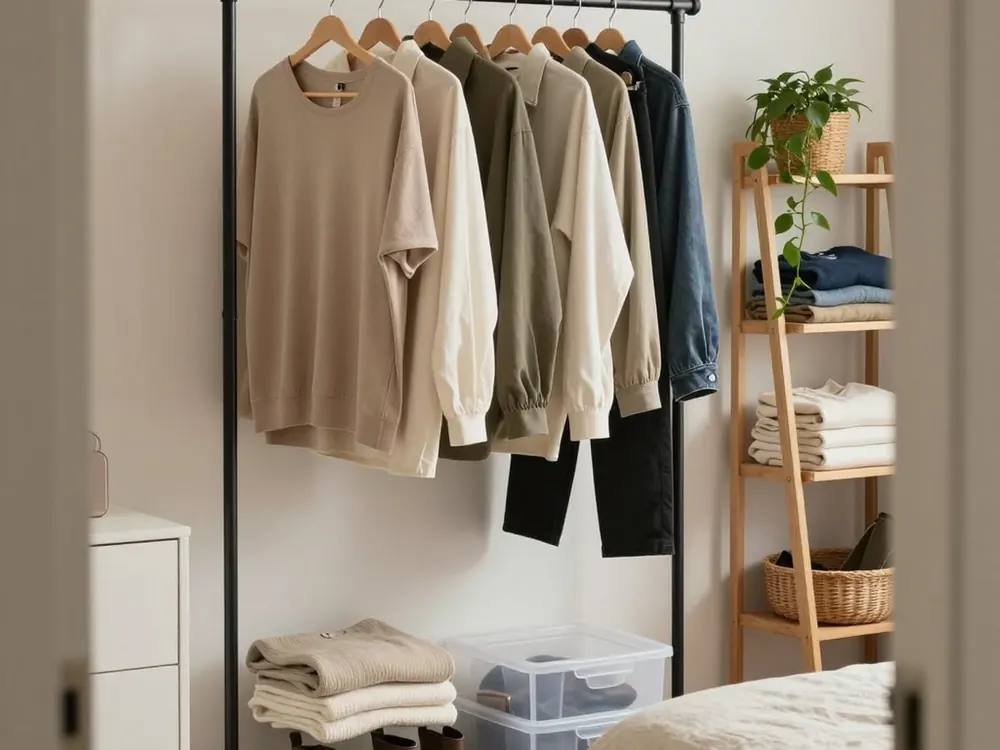
A sturdy metal rack gives you instant closet space against a wall, or it can act as a room divider in a studio. Look for one with a lower shelf for shoes, bags or folded jeans so you don't need a separate piece of furniture. Most standard racks are 36 to 48 inches wide and about 18 inches deep. Check the weight rating before you buy, because cheap single-rail racks tend to bow once you load them with winter coats.
Best for: Anyone who needs to hang work clothes, dresses and jackets.
Typical price: $30–$90
See heavy-duty clothing racks →
2. Portable Wardrobe With a Fabric Cover
If you don't like seeing your clothes all day, a covered wardrobe hides everything behind a zip-up or roll-up fabric front. Most combine a hanging rod with side shelves, and they assemble from lightweight steel tubes with no tools. The cover also keeps dust off clothes you don't wear every week. Measure your ceiling and any window sills first, since these usually run 60 to 70 inches tall.
Best for: Studios and shared rooms where visual clutter bugs you.
Typical price: $30–$70
See covered portable wardrobes →
3. Rolling Under-Bed Storage Bins
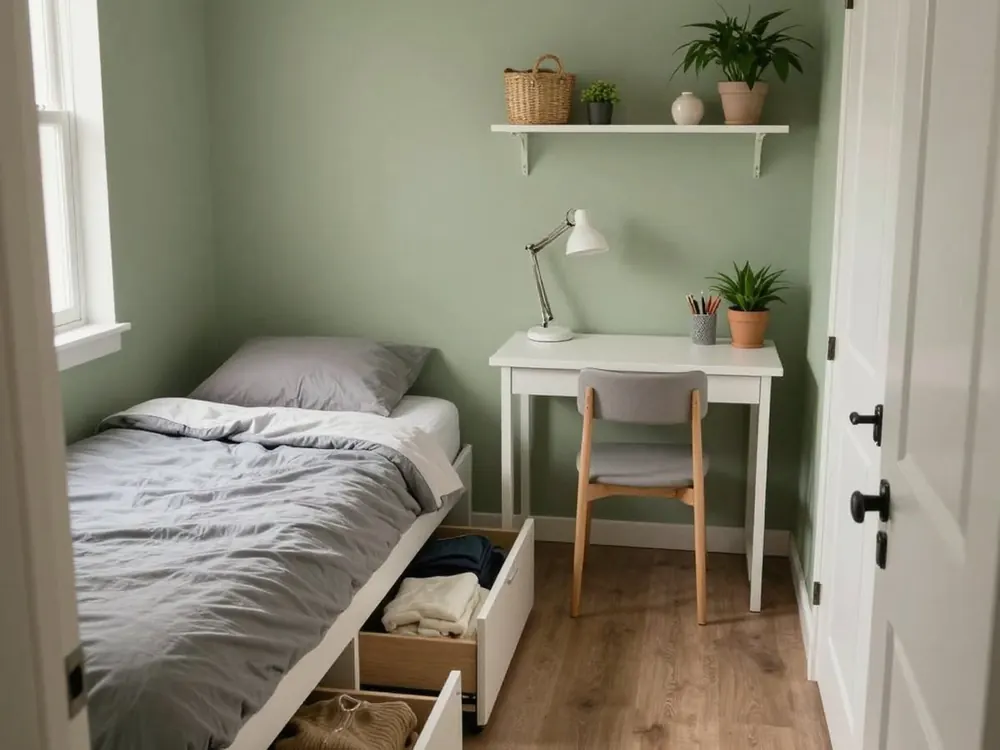
The space under your bed is the biggest storage area most renters ignore. Clear rolling bins slide out without you having to lift the mattress or move furniture, and lids keep dust off off-season sweaters, spare sheets and shoes. Measure your bed's clearance before ordering: most low-profile bins need about 6 inches. Label every bin so you can grab winter sweaters in December without pulling everything out.
Best for: Off-season clothes, extra bedding and shoes.
Typical price: $25–$50 for a 2- or 4-pack
4. Bed Risers
If your bed sits too low for bins, risers can lift it 3 to 8 inches, which turns a dead gap into real storage. Choose stackable or solid risers sized for your bed's leg type: round, square or caster wheels. Some versions have built-in outlets and USB ports, which helps if your nightstand space is tight. Skip them if your bed frame wobbles already, because the extra height makes that worse.
Best for: Low beds with no usable clearance.
Typical price: $15–$35
5. Floor-to-Ceiling Tension Pole Closet System
Tension pole systems press between your floor and ceiling, so they don't need screws or wall anchors. You get adjustable rods and shelves that can tuck into a corner or fill an empty wall, which makes them the closest thing to a built-in closet a renter can install. Check your ceiling height range against the product specs, and avoid popcorn or drop ceilings, which can crack or shift under pressure.
Best for: Making an awkward corner into a real closet.
Typical price: $45–$120
See tension pole closet systems →
6. Narrow Fabric-Drawer Dresser
Without a closet, your dresser becomes command central for everything that doesn't hang. A tall, narrow unit with fabric drawers fits in a 12- to 18-inch gap next to the bed or rack, and it's light enough to carry up a walk-up. Give each drawer one category: socks and underwear, workout gear, basics, sleepwear. For keeping the top surface tidy too, see our bedroom dresser top organization ideas.
Best for: Folded basics in a tight footprint.
Typical price: $40–$100
7. Slim Velvet Hangers
This is the cheapest upgrade on the list and the one that makes the biggest difference. Slim velvet hangers take up far less rail space than plastic or wooden ones, and the grip keeps camisoles and wide necklines from sliding off. When they all match, a visible rack looks deliberate instead of messy. They aren't great for heavy winter coats, so keep a few sturdy wooden hangers for those.
Best for: Fitting more onto a short rack and keeping it looking tidy.
Typical price: $20–$40 for 50
8. Over-the-Door Organizer With Clear Pockets
The back of your bedroom door is free storage, and it's out of sight once the door closes. Clear-pocket organizers work for shoes, but they also hold rolled scarves, belts, tights, socks and small accessories. Make sure the hooks match your door's thickness (most fit standard 1 3/8-inch interior doors) and that the door still shuts flush. Felt pads on the hooks help protect the paint.
Best for: Shoes and small accessories that pile up on the floor.
Typical price: $15–$35
See over-the-door organizers →
9. Drawer Dividers
Vertical folding, where shirts are filed upright instead of stacked, only stays neat if something holds the rows in place. Adjustable spring-loaded dividers or fabric honeycomb inserts keep every item visible, so you stop digging through drawers and actually wear what you own. Measure your drawer's interior depth and width before ordering, because fabric dresser drawers are often shallower than wood ones.
Best for: Socks, underwear, T-shirts and leggings.
Typical price: $15–$30
10. Command Hooks for Bags, Robes and Jewelry
Command adhesive hooks come off cleanly when you follow the pull-tab instructions, which makes them the go-to wall option for renters. Put a row by the door for bags and tomorrow's outfit, or stick small clear hooks inside a wardrobe for necklaces. Stay within the weight rating on the package, and don't use them on textured walls, wallpaper or freshly painted surfaces. For more ways to display jewelry, see our jewelry and accessory organization guide for small bedrooms.
Best for: Damage-free hanging spots on walls and doors.
Typical price: $10–$25
How to choose
- Measure the wall, not the room. Note the width of the wall you'll use, the distance to the nearest door swing and your ceiling height. A 48-inch rack with 6 inches of clearance on each side feels much calmer than one squeezed edge to edge.
- Check under-bed clearance. Measure from the floor to the bottom of the frame or slats. If you have less than 6 inches, use bed risers or shallow zip-up bags instead of hard bins.
- Read weight limits honestly. Ten pairs of jeans and a few coats can add up to 40 to 60 pounds. Pick racks with a stated capacity above what you plan to hang, and don't hang anything heavy from adhesive hooks.
- Adhesive vs. tension vs. freestanding. Adhesive works for light items on smooth, painted walls. Tension systems need solid ceilings. Freestanding pieces carry the least risk to your deposit and move with you.
- Read your lease. Some leases ban adhesive on walls or anything touching the ceiling. If you aren't sure, ask your landlord in writing.
- Rotate seasonally. You can't keep four seasons of clothes out in a closet-free room. Store off-season pieces in labeled bins and keep a note on your phone listing what's in each one. Our seasonal clothing storage ideas walk through the full rotation.
- Group by category. Hang work clothes together, casual clothes in another section and special-occasion pieces at the end. When you can see everything, getting dressed goes faster and you wear more of what you own.
FAQ
Can I hang a closet rod without drilling?
Yes. Use a freestanding rack, a covered wardrobe or a floor-to-ceiling tension pole system. Tension rods between two close walls (like an alcove) work for lightweight items. Don't rely on adhesive strips to hold a loaded clothing rod.
What's the cheapest way to start?
Get a basic clothing rack, a pack of slim velvet hangers and one over-the-door organizer. That usually comes to under $100 and covers hanging space, shoes and accessories. Thrift stores and Facebook Marketplace are good places to find cheap dressers.
How do I keep a visible rack from looking messy?
Use matching hangers, hang items from light to dark or by category, and keep only current-season clothes out. Put a basket on the bottom shelf to catch loose items. A covered wardrobe is the easiest fix if you still don't like the look.