Updated · 7 min read
Renter-Friendly Decor Ideas That Protect Your Deposit
Product buttons open current options and prices at the shop. Nothing here is sponsored. How we pick.
These ideas are for renters in studios, dorms, and small apartments who want their place to feel like home without paying for it at move-out. Every pick below goes up without paint, power tools, or permanent changes, and comes down cleanly when your lease ends. You'll also find the small checks that keep "removable" from becoming a deduction.
This post contains affiliate links. As an Amazon Associate I earn from qualifying purchases.
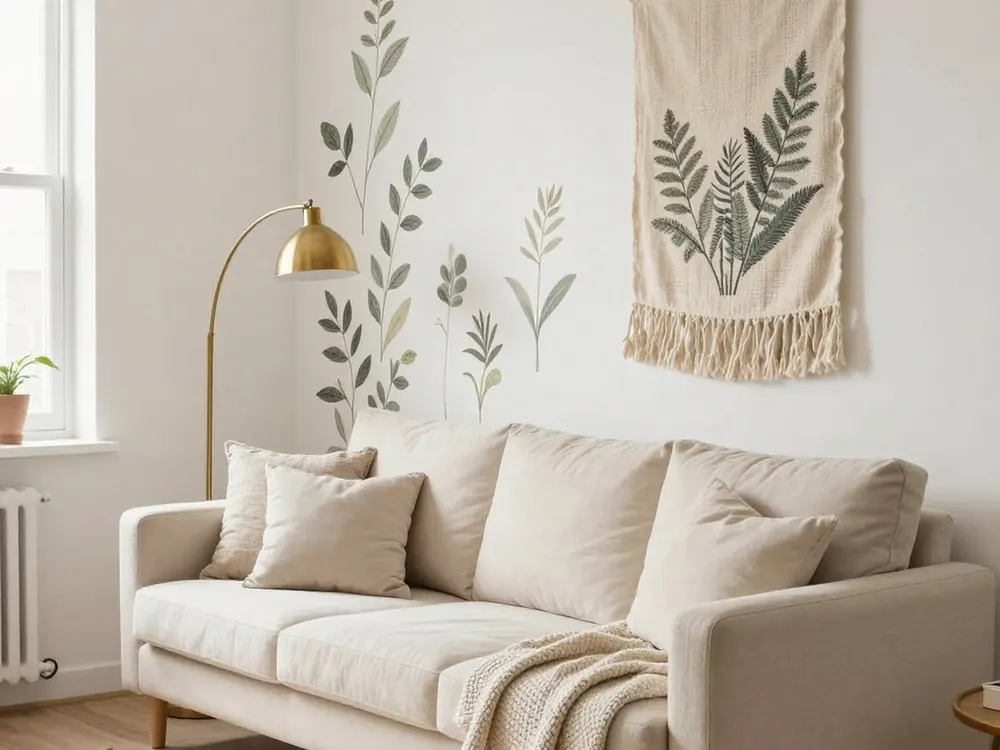
1. Peel-and-stick wallpaper for one accent wall
Removable wallpaper changes a room faster than anything else on this list, and you don't need a whole wall to see the difference. Try the wall behind your bed, the back of a bookcase, or the inside of a closet door. Pick a smooth, vinyl-style paper labeled "removable," and test a small hidden patch for a week first. Paper is most likely to lift paint on flat finishes and fresh paint, so press-test before you commit to a full roll.
Best for: A plain bedroom or living room wall that needs one focal point
Typical price: $25–$50 per roll (most cover roughly 25–30 sq ft)
2. Command picture-hanging strips for art and gallery walls
3M's Command Picture Hanging Strips use interlocking Velcro-style strips. You can hang framed prints, mirrors, and canvases without a single nail hole. They work best on smooth, painted drywall. Respect the weight rating on the package: if a large-pair set is rated for 16 lbs, a 14-lb frame is pushing it. For more ways to use them, see Command Strip Organization Hacks for Renters: 9 Damage-Free Picks That Actually Hold Up.
Best for: Gallery walls, framed prints, and lightweight mirrors
Typical price: $8–$20 per pack
3. Plug-in or rechargeable wall sconces
Most rentals have one harsh overhead light. Sconces give you softer light at eye level with no electrician needed. Plug-in models usually need two small screws, so check whether your lease treats small holes as normal wear. If you can't make any holes, look for rechargeable puck-light sconces that hang on adhesive mounts. If you do go with a plug-in model, a paintable cord cover keeps the cord tidy, but stick it on with the same caution you'd use for any adhesive.
Best for: Bedside reading light in a studio with no room for nightstand lamps
Typical price: $30–$80 for a pair
4. Warm 2700K LED bulbs or smart bulbs
Swapping bulbs is the cheapest decor upgrade there is, and you take them with you when you move. Warm white (2700K) makes beige walls and carpet look cozy instead of clinical. Smart bulbs add dimming and color control from your phone, so you don't need any new switches. Save the original bulbs in a bag so you can put them back at move-out.
Best for: Rooms that feel cold or sterile at night
Typical price: $8–$15 for a 4-pack of warm LEDs; $10–$25 per smart bulb
5. Tension curtain rods and no-drill rod brackets
Tension rods fit inside the window frame and hold up with spring pressure alone. No-drill brackets wedge into or clip onto the top of the window trim. Either way, you can swap out ugly blinds-only windows without holes. Measure the inside width of your frame and buy a rod whose range puts your measurement in the middle, not at the max. For a taller look, choose curtains long enough to just touch the floor.
Best for: Bedroom privacy, blackout curtains, and dressing up bare windows
Typical price: $12–$35 per rod or bracket set
6. A leaning full-length floor mirror
A big mirror leaned against the wall adds light and depth, doubles as your outfit check, and needs zero hardware. In a small room, put it across from or next to a window to bounce daylight around. On carpet, lean it at a gentle angle. Add anti-slip pads under the bottom edge on hard floors, plus an anti-tip strap if you have pets or kids.
Best for: Dark studios and bedrooms without a closet mirror
Typical price: $60–$150
7. An area rug with a floor-safe rug pad
A rug defines your "living room" in a studio and covers worn carpet or tired laminate. It also protects the floor you'll be judged on at move-out. The pad matters as much as the rug: some rubber-backed rugs and cheap PVC pads can stain or discolor vinyl and hardwood. Look for felt or natural-rubber pads labeled safe for your floor type. In a small living area, aim for a size that fits at least the front legs of your sofa and chairs; 5x7 is a common fit.
Best for: Defining zones in a studio and covering dated flooring
Typical price: $50–$150 for a 5x7 rug; $15–$35 for a pad
8. A leaning ladder shelf
Floating shelves need anchors, and anchors leave holes. A ladder shelf leans against the wall and gives you the same display space for books, plants, and baskets. Narrow 18–24-inch models fit beside a desk or in a dead corner. Put the heaviest items on the bottom rungs, and use the included anti-tip hardware if your lease allows one small screw.
Best for: Vertical storage and display when your floor space is tight
Typical price: $40–$90
9. Plants in decorative pot covers with saucers
Easy plants like pothos, snake plants, and ZZ plants make a rental feel lived-in fast. Keep each plant in its plastic nursery pot and drop it into a decorative cover, so you can restyle without repotting. The deposit-saver is the saucer: water rings on windowsills and swollen laminate are common move-out charges. If your light is poor, a good faux plant gives you the same look with no watering at all.
Best for: Softening hard corners and empty shelves
Typical price: $15–$35 for a set of planters with saucers
For low-cost ways to finish the look, see Budget Decor Ideas for Your First Apartment: 9 Renter-Safe Finds Under $100.
How to choose
- Read your lease first. Some leases allow small nail holes as normal wear and others ban them. Some ban adhesives on doors or cabinets. Five minutes of reading tells you which picks are safe for you.
- Check your wall finish. Adhesives and wallpaper do best on smooth satin or eggshell paint. Flat paint and fresh paint (less than a couple of weeks old) are the most likely to peel. Heavily textured walls often won't hold adhesives at all.
- Respect weight limits, then go under them. Weigh what you're hanging on a bathroom scale. If it's within 20% of the strip's rating, use more strips or a lighter item.
- Know adhesive vs. tension. Tension rods and leaning furniture leave no marks at all, so choose them whenever you can. Use adhesive for lightweight items on smooth walls.
- Measure before you buy. Measure the inside of each window frame for rods, the wall height for mirrors, and the floor area for rugs. Tape the rug outline on the floor before ordering.
- Protect your floors. Use felt pads under furniture legs, saucers under plants, and a floor-safe pad under every rug.
- Photograph everything on move-in day. Dated photos of existing scuffs and stains are your best defense if anything is disputed.
If clutter is the bigger problem than bare walls, Home Organization Amazon Must-Haves for Renters covers the storage side.
FAQ
Will peel-and-stick wallpaper really come off without damage?
Usually, on smooth walls with satin or eggshell paint. It can lift flat or freshly applied paint, so test a hidden spot for a week before covering a whole wall. To remove it, peel slowly at a low angle. A hair dryer on low softens stubborn sections.
How do I remove Command strips without peeling paint?
Hold the item, then pull the strip's tab slowly and straight down along the wall. Keep stretching it until it releases. Don't pull it out toward you, which is what tears paint.
What decor can I take with me when I move?
All of it. Rugs, mirrors, lamps, bulbs, curtains, shelves, and planters move with you. That's why they're a better investment than paint or fixtures you'd have to leave behind or undo.