Updated · 7 min read
Small Apartment Cleaning Supplies Storage Ideas: 9 Renter-Safe Buys That Fit Tight Spaces
Product buttons open current options and prices at the shop. Nothing here is sponsored. How we pick.
These picks are for renters in studios, small one-bedrooms, and dorms whose cleaning supplies are crammed under the sink or spilling out of a closet. Each one fits a narrow space, needs no drilling or only removable adhesive, and helps you find what you need without buying duplicates. Start with the spot that bugs you most, measure it, and buy for that one first.
1. Expandable Two-Tier Under-Sink Organizer
The space under your sink is usually your biggest cleaning storage area, and the drain pipe makes most of it hard to use. An expandable two-tier organizer adjusts in width and has shelves that slide around the pipe, so you can stack bottles in two layers instead of one. Measure between the cabinet's side walls and from the floor of the cabinet to the bottom of the pipe before you buy. Keep everyday sprays on the top tier and refills and backups on the bottom.
Best for: Kitchen or bathroom sink cabinets with an awkward pipe layout
Typical price: $20–$45
See expandable under-sink shelves →
2. Clear Pull-Out Bins With Handles
If your cabinet is deep, things get lost in the back. Clear plastic bins with front handles act like drawers you don't have to install. Pull one out, grab the glass cleaner, and slide it back. Sort them by job (kitchen, bathroom, floors) so you only have to pull out one bin. The raised sides also catch leaks before they reach the cabinet floor, which protects your security deposit.
Best for: Deep cabinets and catching drips
Typical price: $15–$35 for a set of 2–4
3. Tension Rod for Hanging Spray Bottles
This cheap trick works well. Wedge a small tension rod across the top of your under-sink cabinet and hang spray bottles from it by their triggers. That clears floor space in the cabinet for bins and bulk refills underneath. It holds by pressure, so it leaves no marks. Get a rod sized for your cabinet's inside width (usually 16 to 30 inches) and stick to light and medium bottles.
Best for: Getting spray bottles off the cabinet floor
Typical price: $8–$15
4. Portable Cleaning Caddy With Handle
A caddy holds your everyday kit: all-purpose spray, microfiber cloths, a scrub brush, and gloves. You carry the whole thing from room to room instead of making three trips. In a small apartment, it also means you can keep one set of supplies instead of separate kitchen and bathroom stashes, which saves money and space. Look for divided compartments and a base that fits on your under-sink tier or a closet shelf.
Best for: Weekly cleaning in studios and one-bedrooms
Typical price: $12–$30
5. Over-the-Door Organizer With Clear Pockets or Baskets
The backs of your pantry, closet, and bathroom doors are free vertical storage that installs without tools. Clear-pocket versions show your stock at a glance, which helps you stop rebuying sponges. Wire-basket versions hold heavier bottles. Check that the hooks fit your door thickness and that the door still closes over them. For more ideas, see Over-the-Door Storage Ideas for Small Apartments: 9 Renter-Safe Buys That Need No Drilling.
Best for: Closet or pantry doors with no wall space nearby
Typical price: $15–$40
See over-the-door organizers →
6. Slim Rolling Gap Cart
Most kitchens and laundry nooks have a gap of 5 to 8 inches between the fridge and the wall or beside the washer. A slim rolling cart turns that gap into a three- or four-tier supply tower that slides out when you need it and disappears when you don't. Nothing gets installed, and it moves with you. Measure the gap's width, depth, and height, and leave about half an inch on each side so it rolls freely.
Best for: Kitchens with no under-sink space to spare
Typical price: $25–$50
7. Adhesive Mop and Broom Holder
Brooms and mops that lean in a corner always fall over. An adhesive grip holder like the Command Broom Gripper or a Command mop and broom holder sticks inside a closet or on the side of a fridge without drilling. Follow the weight rating on the package and the cure-time instructions, which usually say to wait about an hour before hanging anything. Use the stretch-release tab when you move out so you don't peel the paint.
Best for: Brooms, mops, and Swiffer-style dusters
Typical price: $8–$20
8. Over-the-Toilet Storage Shelf
In a small bathroom, the wall above the toilet usually has the only open space. A freestanding over-the-toilet unit stands on the floor and needs no drilling. It gives you two or three shelves for toilet cleaner, extra paper towels, and spare sponges. Pick one with a closed cabinet section so the bottles aren't on display, and check that its inside width and leg height clear your tank. For more bathroom fixes, see Small Apartment Bathroom Storage Ideas for Renters.
Best for: Bathroom-only supplies in a tiny bathroom
Typical price: $40–$90
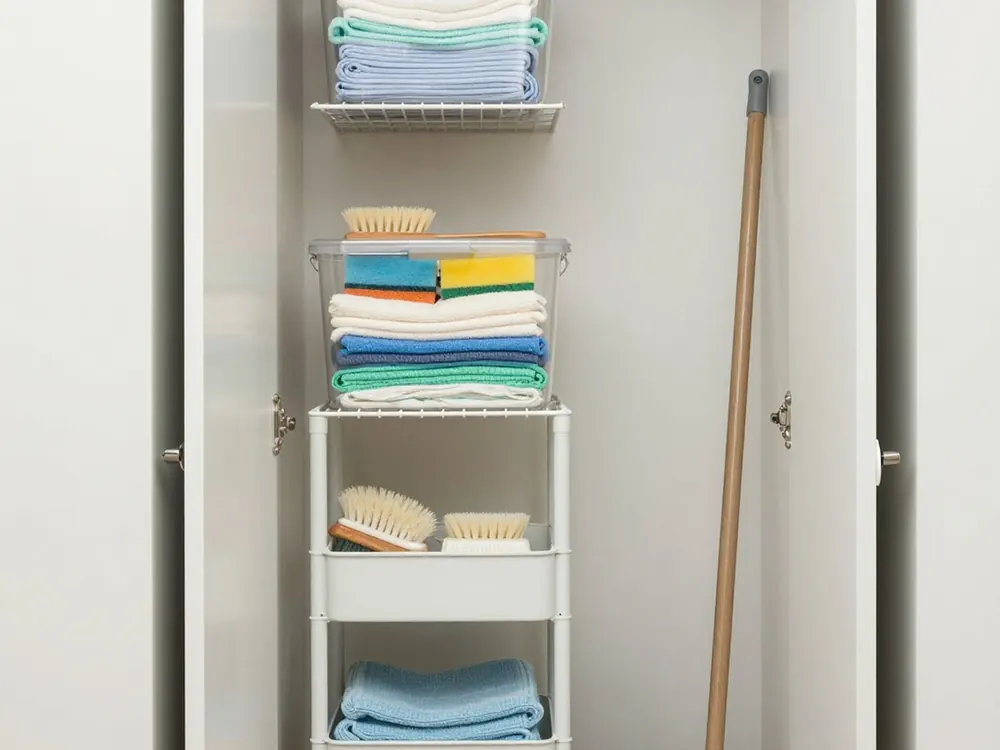
9. Narrow Freestanding Utility Cabinet
If you don't have a utility closet, a slim cabinet with doors (about 12 to 16 inches wide) gives you one. Get one with an open, full-height side for a vacuum and broom and adjustable shelves for bottles. Closed doors keep chemicals out of sight and away from pets. It's useful in studios where everything is visible from the bed. Any tall cabinet should be anchored, and since many renters can't drill, set it against a wall and keep the heaviest items on the bottom shelf. Hidden Storage Solutions for Studio Apartments: 9 Renter-Safe Buys That Hide the Clutter has more ideas.
Best for: Studios and apartments with no utility closet
Typical price: $60–$150
How to choose
- Measure everything twice. For under-sink spots, measure the cabinet's inside width at the door opening, which is often narrower than the interior, plus the depth and the clearance under the pipe. For gap carts, measure width, depth, and height.
- Check weight limits against what you'll store. A full gallon of liquid weighs about 8 pounds. Adhesive hooks and tension rods have real limits, so put heavy refills on the floor or a bottom shelf, not on hanging storage.
- Adhesive vs. tension vs. freestanding. Tension rods leave no marks. Removable adhesive is fine on smooth, painted surfaces if you follow the removal instructions, but it can fail on textured walls or in steamy bathrooms. Freestanding storage is the safest choice for your deposit.
- Pick clear or label everything. Clear bins show what you have. If you use opaque bins, label them with a label maker or painter's tape so no one grabs the wrong product.
- Plan for drips. Put a bin or a waterproof shelf liner under anything liquid. Water damage to the cabinet base is a common deposit deduction.
- Store chemicals safely. Keep products in their original labeled containers. Store bleach away from ammonia-based and acidic cleaners, and keep everything away from heat sources. If pets or kids visit, add an adhesive cabinet lock.
- Cut down before you buy. Combine half-empty duplicates and switch to one multi-surface cleaner where you can. Concentrates you dilute yourself take up far less space than several pre-mixed bottles.
Short on space everywhere? How to Organize a Tiny Studio Apartment: 10 Renter-Safe Buys That Make Every Inch Work covers the rest of your place.
FAQ
Where should I store cleaning supplies in a small apartment with no closet?
Start under the kitchen sink with an expandable organizer and a tension rod. Then add a slim gap cart or an over-the-door organizer for the overflow. If you still need room, a narrow freestanding cabinet can act as your utility closet.
Is it safe to keep cleaning supplies under the kitchen sink?
Yes, as long as the products are in their original containers, sitting in a bin that catches leaks, and away from food. Store bleach away from ammonia and acidic cleaners, and add a cabinet lock if kids or pets are around.
Will adhesive hooks damage my rental walls?
Usually not, if you use removable adhesive on smooth painted surfaces, stay under the weight limit, and pull the release tab straight down when you take it off. Avoid adhesives on wallpaper, textured walls, and freshly painted surfaces. Tension rods and freestanding pieces are the safest options.