Updated · 6 min read
Coffee Station Ideas for Small Kitchen Counters: 9 Renter-Friendly Buys That Fit
Product buttons open current options and prices at the shop. Nothing here is sponsored. How we pick.
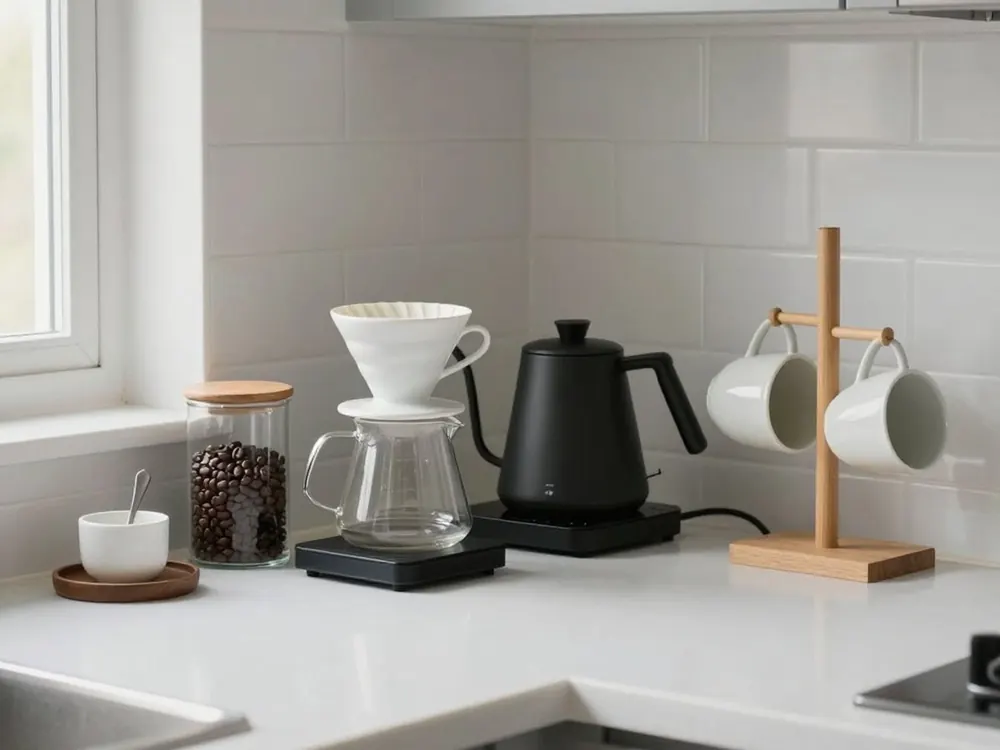
This guide is for renters with a studio, dorm, or galley kitchen who want a real coffee setup that doesn't take over the only usable counter. Every pick below is chosen to save counter space, needs no drilling, and comes out when you move without costing you your deposit.
Before you buy anything, pick your spot. You need an outlet within reach, a spot out of your main prep zone, and ideally a short walk to the sink for refilling the carafe. A corner that's 12 to 18 inches wide is enough if you also use the space above and below it.
1. Two-Tier Countertop Coffee Riser
A two-tier riser stacks storage above and beside your machine, so mugs, syrups, and canisters go up instead of out. Look for a model with a lower shelf height that clears your coffee maker. A riser around 15 to 20 inches wide fits most corner spots. Metal-frame versions hold more weight than bamboo, but bamboo looks warmer on open counters.
Best for: Turning a cluttered corner into a defined station without hanging anything
Typical price: $20–$40
See countertop coffee risers →
2. Coffee Pod Drawer That Sits Under Your Machine
If you use a pod machine, a pod drawer goes under it so your pod storage takes up no extra counter space. The catch is height: the drawer adds 2 to 3 inches, and standard upper cabinets sit about 18 inches above the counter. Measure your machine's height plus the drawer before you order, and include the space needed to open the lid.
Best for: Pod drinkers with a single-serve machine
Typical price: $20–$35
3. Slim Single-Serve or Manual Brewer
If your current machine is the problem, downsize it. Compact single-serve makers come in slim widths (look for under 6 inches), and a manual pour-over cone or an AeroPress can go back in the cabinet when you're done. If you only make one or two cups a day, a full 12-cup drip machine is taking up counter space you could use for something else.
Best for: Solo coffee drinkers in studios and dorms (check dorm rules on heating appliances first)
Typical price: $25–$40 for manual brewers; $60–$110 for compact single-serve machines
4. Under-Shelf Mug Hooks (Slide-On, No Screws)
These metal hook racks slide onto the edge of a cabinet shelf, so your mugs hang underneath and use space that's usually empty. No tools and no adhesive, so nothing to damage. Check the max shelf thickness on the listing (usually up to about ¾ inch) and measure your shelf before you order.
Best for: Freeing up cabinet or counter space your mugs are currently taking
Typical price: $10–$18
5. Countertop Mug Tree
If you don't have upper cabinets near your station, a mug tree holds six or so mugs on a footprint about the size of a dinner plate. Choose one with a weighted base so it doesn't tip when you grab a mug. Following the old rule of displaying only your five to seven favorites keeps it from looking cluttered.
Best for: Open-shelf kitchens or stations with no cabinet above
Typical price: $12–$25
6. Airtight Coffee Canister
A canister holds more in a smaller footprint than a half-rolled bag, keeps your beans fresher, and looks neater. Opaque canisters with a one-way CO2 valve are best for whole beans, since light and air are what make coffee go stale. Pick a canister that holds about one bag's worth so it fits on a riser shelf instead of taking up its own spot.
Best for: Whole-bean or ground coffee drinkers who buy by the bag
Typical price: $15–$30
7. Small Turntable for Syrups and Add-Ins
Syrup bottles, sugar, and cinnamon pile up fast in a corner. A 9 to 10 inch turntable fits into the dead space where two counters meet, and you can get to every bottle with one spin. A raised edge keeps bottles from sliding off.
Best for: Latte and flavored-coffee drinkers with lots of add-ins
Typical price: $10–$20
8. Adhesive Wall Shelf or Hanging Caddy
If you're allowed to use adhesive, a small adhesive shelf or wire caddy above the counter holds filters, stir sticks, and a jar of sweetener packets. Keep heavy things like full canisters and mugs off adhesive. Use adhesive only for light items, and check the weight rating on the package. Test-peel one strip in a hidden spot first, since textured or freshly painted walls don't hold well.
Best for: Renters with a blank wall stretch but no counter space left
Typical price: $15–$30
9. Slim Rolling Cart (When the Counter Is Truly Full)
If there's no counter space at all, move the whole station off the counter. A three-tier rolling cart that's 10 inches deep or less fits between the fridge and wall, at the end of a counter, or next to a dorm desk. Put the machine on top, beans and mugs in the middle, and backup supplies on the bottom. Lock the wheels before brewing.
Best for: Galley kitchens and dorms with zero spare counter
Typical price: $25–$50
How to choose
- Measure three dimensions, not one. Measure the width of your spot, the depth from the backsplash to the counter edge, and the height to the bottom of your upper cabinets. Then subtract the space you need to open the machine's lid or water tank.
- Pull the machine forward when brewing. Steam rising straight into upper cabinets can warp the finish or peel the laminate over time, which can come out of your deposit. Keep a little room to slide it out.
- Match the mounting method to the weight. Use slide-on hooks and tension or freestanding pieces for heavy items like mugs, canisters, and machines. Use adhesive only for light items, and stay under the rated weight limit.
- Check your lease and dorm rules. Some leases ban adhesive on walls, and many dorms limit which heating appliances you can have. Look this up before you buy.
- Plan your workflow. Set things up in order: beans → brewer → mugs → add-ins. If you drink it black, put the add-ins on the lower shelf.
- Count your outlets. Don't run your coffee maker off a cheap power strip shared with a kettle or toaster. Space-hungry appliances often need their own outlet.
For more ways to free up counter space around your station, see Apartment Kitchen Storage Hacks for Small Spaces: 10 Renter-Safe Buys That Actually Fit. If your backup coffee and filters need a home, How to Organize Kitchen Cabinets in a Small Kitchen: Maximize Every Inch covers cabinet layouts. On a tight budget? Small Apartment Kitchen Organization on a Budget: 17 Solutions That Actually Work has more low-cost fixes.
FAQ
How much counter space do I need for a coffee station?
12 to 18 inches of width is enough if you use the space above it for mugs and supplies. If you don't have that much, a slim rolling cart takes the station off the counter entirely.
Can I put my coffee maker under the upper cabinets?
You can store it there, but pull it forward to the counter edge while it brews so the steam doesn't hit the cabinet. Over time, steam can damage the finish, and you'd be the one paying for it at move-out.
Should I store coffee beans in the fridge or freezer?
Not for everyday use. Moving beans in and out of the cold creates condensation, which hurts the flavor. Keep the beans you're using now in an airtight, opaque canister away from the stove and sunlight. Freeze extra beans only in sealed portions you won't reopen until you use them.