Updated · 7 min read
Small Kitchen Open Shelving Organization Ideas: 10 Renter-Safe Buys That Actually Fit
Product buttons open current options and prices at the shop. Nothing here is sponsored. How we pick.
Open shelves in a small rental kitchen can make it feel bigger, or they can turn into a wall of mismatched mugs and half-open pasta boxes. This guide is for renters with a few open shelves, or none, who want them to look intentional and still work every day. Every pick below fits common shelf depths and needs no drilling.
1. Stackable Metal Shelf Risers
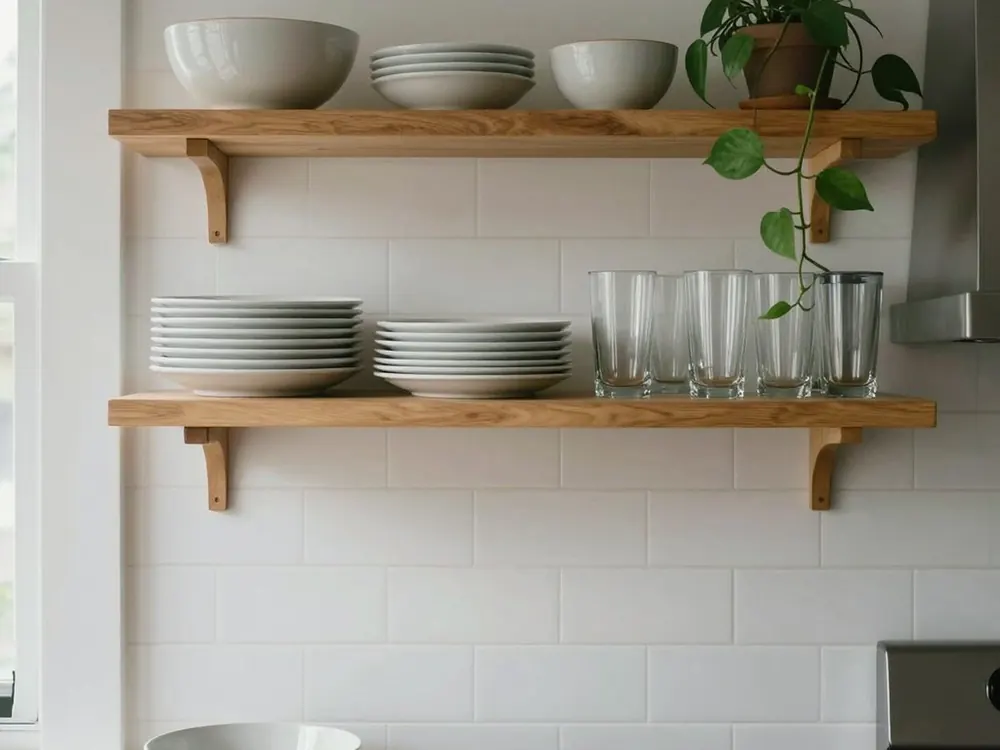
A riser turns one shelf level into two. Put everyday plates underneath and bowls or small plates on top, and stop stacking everything into one wobbly tower. Most open shelves in rentals are 8 to 12 inches deep, so look for risers 7 to 10 inches deep that won't overhang. Expandable versions let you fit the riser to an odd-width shelf.
Best for: Doubling dish storage on shelves with tall gaps
Typical price: $15–$35 for a set of 2
2. Clear Airtight Food Storage Canisters
A row of matching canisters looks tidier than a row of cardboard boxes, and you can see when you're running low. Square or rectangular shapes take up less space on a shelf than round ones. OXO Good Grips POP containers are a popular option because they stack and have one-button lids, but cheaper generic sets work fine too. Pick 2 or 3 heights and buy only those so your shelf has clean, even lines.
Best for: Pasta, rice, oats, flour, sugar, snacks
Typical price: $25–$60 for a 4- to 10-piece set
See clear stackable canisters →
3. Under-Shelf Hanging Baskets
These baskets slide onto the shelf above, so you get a bonus storage level in the empty air below it with no tools. They work well for wraps, tea, spice packets, or dish towels. Before you buy, measure your shelf thickness: most clip-on baskets fit shelves up to about 0.75 to 1 inch thick. Keep what goes in them light, since the shelf above takes all the weight.
Best for: Using the dead air between two shelves
Typical price: $12–$30 for a set of 2
4. Clip-On Under-Shelf Mug Hooks
Mugs take up a lot of space on a shelf. Hanging them from a slide-on hook rack under the shelf frees that space for something else. Most racks hold 4 to 6 mugs and clip on the same way the baskets do. Check that your mugs fit in the gap between the hooks and the shelf below.
Best for: Mug collections, measuring cups, small strainers
Typical price: $10–$20
5. Turntable (Lazy Susan) for Oils and Spices
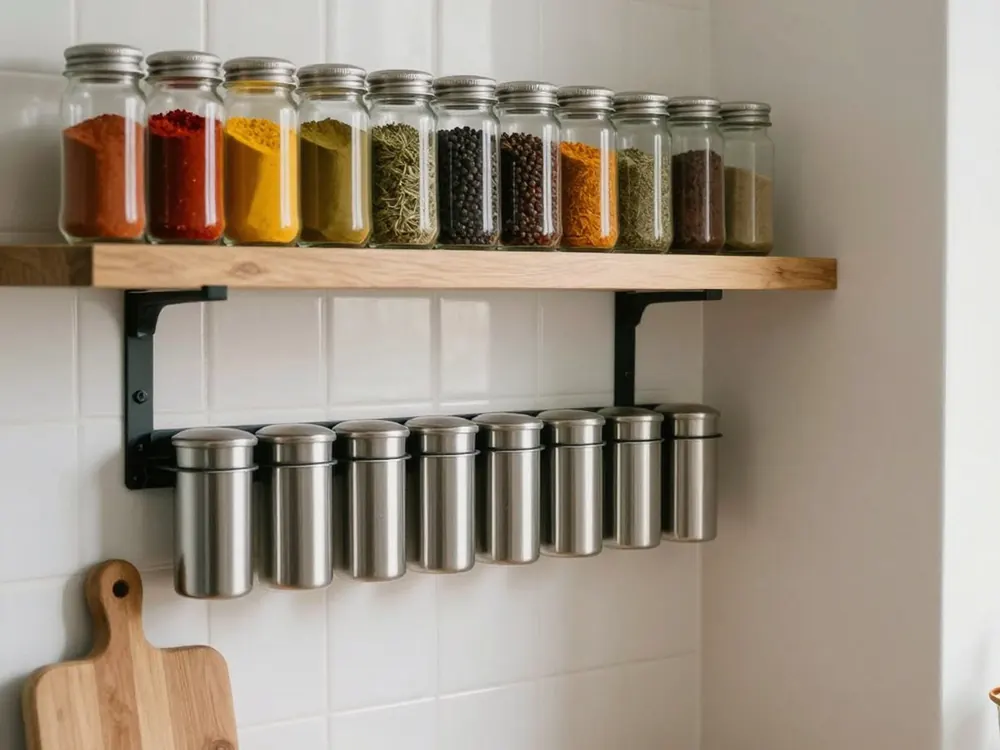
Open shelves are good for everyday cooking basics, as long as they're grouped together. Put oils, vinegars, and your most-used spices on a 9- to 10-inch turntable so you can spin to what you need instead of knocking bottles over. Choose one with a raised lip so nothing slides off. A clear turntable or a bamboo one looks best on a shelf people can see.
Best for: A "cooking zone" near the stove
Typical price: $12–$28
6. Countertop Vertical Plate Rack
Standing plates upright instead of stacking them looks neat and lets you grab one without lifting the whole pile. A wood or metal plate rack holds 6 to 10 plates and works on a shelf or the counter. Measure your shelf height first, because dinner plates on edge usually need 11 to 12 inches of clearance.
Best for: Showing off simple, matching plates
Typical price: $15–$35
7. Damage-Free Adhesive Hooks
Stick a few hooks on the end of a shelf bracket or on the wall beside your shelves for aprons, towels, oven mitts, or measuring spoons. That keeps these things off the shelf itself. Command hooks from 3M are made for renters and come off cleanly if you pull the tab straight down. Match the hook's weight rating to the heaviest thing you'll hang on it. Wait an hour after sticking it on before you load it.
Best for: Towels, utensils, and small tools you grab often
Typical price: $8–$20 per multipack
See renter-safe adhesive hooks →
8. Label Maker or Pre-Printed Pantry Labels
Labels keep your system working, especially if you live with roommates. A small handheld label maker like the Brother P-touch line prints clean, wipeable labels. If you'd rather not deal with tape cartridges, pre-printed pantry label sets work too. Put labels at the same height on every jar so the row looks even.
Best for: Clear canisters and shared kitchens
Typical price: $10–$15 for label sets; $25–$50 for a label maker
9. Woven or Fabric Storage Baskets
Not everything belongs on display. Use 2 or 3 matching baskets to hide the messy stuff, like snack bags, packets, foil, and the odd tea box. Seagrass, water hyacinth, or fabric bins soften all the plates and glass. Measure the shelf depth and the gap between shelves before ordering. A basket that sticks out past the shelf edge gets bumped every time you walk by.
Best for: Hiding visual clutter while keeping it reachable
Typical price: $20–$45 for a set of 3
10. Freestanding Over-Counter or Wall-Leaning Shelf
If your rental has no open shelves, you can make some without drilling. A freestanding countertop shelf, or a narrow ladder shelf that leans against the wall, gives you the open-shelf look and comes with you when you move. Look for a model under 12 inches deep so you still have counter space to prep food. Leave the heavy cast iron on the bottom.
Best for: Rentals with zero open shelving or a no-holes lease
Typical price: $30–$90
See freestanding kitchen shelves →
How to choose
- Measure three things on every shelf: depth, width, and the gap between shelves. Write them down before you shop. Most returns happen because a riser or basket is half an inch too deep.
- Check the shelf's weight limit. In a rental, open shelves may only be held up by drywall anchors. Keep heavy mixing bowls, cast iron, and stacked dinnerware on the lowest shelf, and put light or decorative things up high.
- Adhesive vs. clip-on vs. freestanding. Clip-on baskets and hooks need a shelf edge without a lip. Adhesive hooks need smooth, clean paint. Wipe the spot with rubbing alcohol first, and don't use them on textured walls or right next to the stove, where heat weakens the adhesive. If you're unsure, go freestanding.
- Limit your finishes. Choose one metal finish (matte black, white, or brass) and one natural texture (wood or woven). Mixing five finishes is what makes open shelving look cluttered.
- Use the rule of thirds. Split each shelf into three sections. Put one nice piece, like a plant, a serving bowl, or a cookbook, in one section, and fill the other two with the things you actually use.
- Store half of what you own somewhere else. Open shelves are for what you use daily and what looks good. Overflow goes in closed storage. Our guide on how to organize kitchen cabinets in a small kitchen covers where the rest can go.
Keeping coffee gear on the shelves too? See our coffee station ideas for small kitchen counters. If dry goods are taking over, our fall pantry restock and organization ideas for renters can help you decide what earns a spot in a clear canister.
FAQ
How do I keep dust off open kitchen shelves?
Store the things you use every day on open shelves. They get washed often, so dust never builds up. Wipe the shelves with a dry microfiber cloth once a week. Keep rarely used serving pieces in a basket or closed cabinet, and use lidded canisters for food.
Can I add open shelving if my lease says no holes?
Yes. Freestanding countertop shelves, leaning ladder shelves, and clip-on under-shelf baskets don't touch the wall. Adhesive hooks are fine for light things. Check your lease anyway, and test the adhesive in a hidden spot first.
What should I actually put on open shelves in a small kitchen?
Put out what you use every day, like plates, bowls, glasses, mugs, and cooking basics, plus one or two decorative pieces per shelf. Aim for about 80% useful items and 20% decor. Anything you use less than once a week usually belongs in closed storage.