Updated · 7 min read
Small Apartment Entryway Organization Ideas: 9 Renter-Safe Buys for a Tiny Entry
Product buttons open current options and prices at the shop. Nothing here is sponsored. How we pick.
If your "entryway" is really just the two feet of floor inside your front door, this guide is for you. These small apartment entryway organization ideas give your shoes, keys, coats and bags a place to go, and none of them need drilling, built-ins or a fight with your landlord over the deposit.
Before you buy anything, list what you actually grab every day when you leave. For most people that's shoes, keys, one jacket, a bag and maybe an umbrella. Anything else, like off-season coats or the reusable bag collection, can live somewhere else.
1. Adhesive Wall Hooks
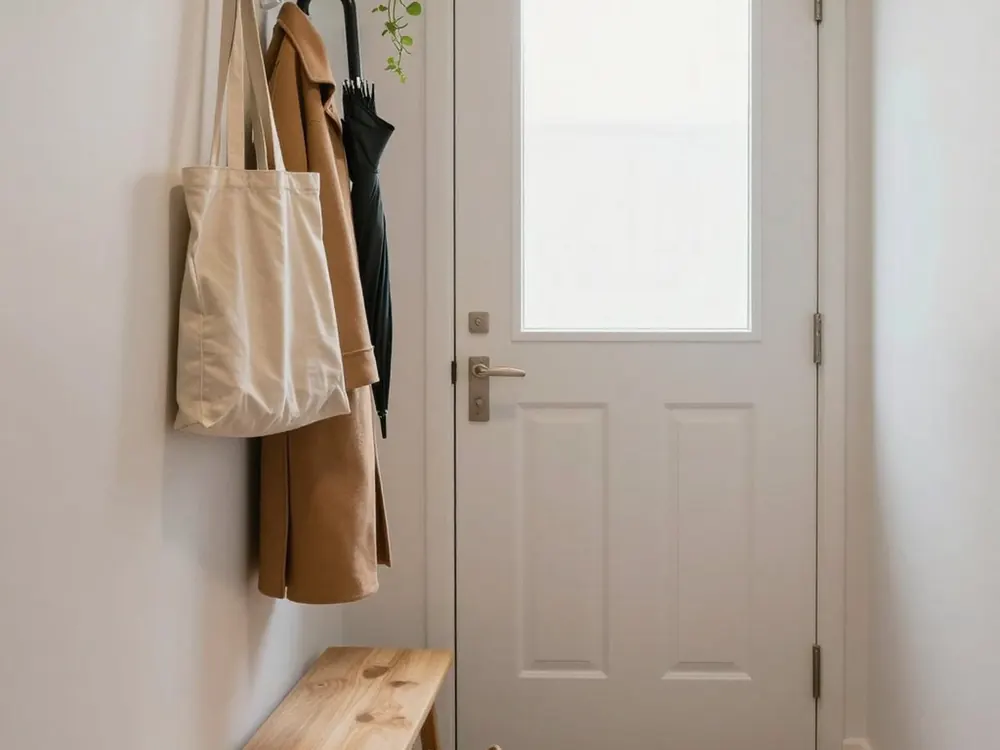
These are the easiest fix for a crowded entry. Command-brand hooks come in sizes from small key hooks to jumbo coat hooks, and they come off cleanly if you pull the tab straight down. Put a row at shoulder height for jackets and bags, and a lower row for a tote or your dog's leash. Check the weight rating on each package. A loaded winter coat or a heavy laptop bag can go over the limit of a single hook, so spread the heavy items out.
Best for: Renters with an empty wall by the door who want hooks today with no tools
Typical price: $8–$20 per multi-pack
2. Over-the-Door Hook Rack
If your front door or a nearby closet door has some clearance, an over-the-door rack gives you five or six hooks without touching the wall. Before you order, measure your door's thickness. Most racks fit a standard 1 3/8" to 1 3/4" door, but some apartment doors are thicker. Look for felt or rubber pads on the back so it doesn't scratch the paint or rattle every time the door closes. For more ways to use the back of a door, see Over-the-Door Storage Ideas for Small Apartments: 9 Renter-Safe Buys That Need No Drilling.
Best for: Entries with no usable wall space at all
Typical price: $15–$35
See over-the-door hook racks →
3. Slim Tipping-Bin Shoe Cabinet
A shoe cabinet with flip-down bins holds shoes upright at an angle, so it's often only 7 to 10 inches deep. Most standard furniture is 15 inches or more. That shallow depth matters a lot when the door swings into the space, and the flat top doubles as a landing spot for keys and mail. One renter note: these are top-heavy, so use the included anti-tip strap. It needs one small screw, so ask your landlord or put it into a stud where a nail hole is easy to patch. A 2-bin version is shorter and much less likely to tip.
Best for: Hiding a shoe pile in a very narrow hallway
Typical price: $45–$110
4. Narrow Storage Bench with Shoe Shelf
A bench gives you somewhere to sit while you put on boots, and the shelf or cubbies underneath keep shoes off the floor. For a tight entry, look for one that's 12 to 14 inches deep and 24 to 32 inches wide. A lift-top storage ottoman does the same job in an even smaller footprint if you don't need open shoe storage. Tape the bench's outline on the floor first and open the door fully to make sure it clears.
Best for: People who need to sit to put on shoes and want storage underneath
Typical price: $50–$130
5. Freestanding Coat Rack or Mini Hall Tree
If you can't (or don't want to) stick anything on the walls, a freestanding coat rack holds coats, scarves and bags with zero installation. A hall-tree style with a small shoe bench at the bottom gives you hooks, seating and shoe storage in one piece. Pick one with a wide or weighted base, because a skinny pole rack loaded on one side can tip over. In a studio where the "entry" opens into the living area, a hall tree also visually marks where the entryway ends. Studio Apartment Layout Ideas for 400 Sq Ft: 10 Smart Plans covers more ways to divide a studio into zones.
Best for: Renters with strict no-wall rules or textured walls where adhesive won't stick
Typical price: $30–$150
See coat racks and hall trees →
6. Wall Key and Mail Organizer
A small organizer with key hooks and a mail slot handles the clutter that usually ends up scattered across your kitchen counter. Pick a lightweight one (wood or metal, under a couple of pounds) so you can hang it with adhesive picture-hanging strips instead of nails. Hang it right next to the door at eye level so dropping your keys becomes automatic. Sort mail as soon as you walk in: recycle junk right away and put bills in the slot.
Best for: Anyone who loses keys or lets mail pile up
Typical price: $15–$35
7. Stackable Narrow Shoe Rack
A 2- or 3-tier bamboo or metal rack is the cheapest way to get shoes off the floor and into a neat line. Measure the gap between your door swing and the wall. Many racks come in 20-inch and 27-inch widths, and some stack so you can add a tier later. Slatted shelves let wet shoes dry and are easy to wipe clean.
Best for: Tight budgets and small shoe collections
Typical price: $18–$40
8. Boot Tray
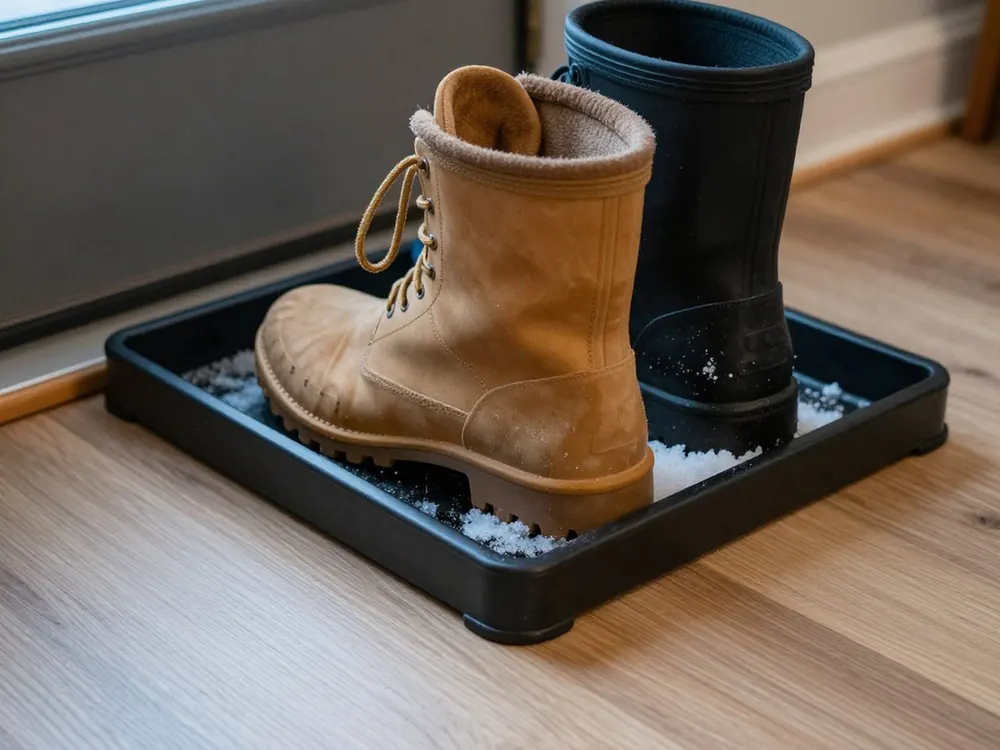
If you get rain or snow, a rubber or plastic boot tray keeps salt, slush and mud off rental carpet or floors, which is exactly the kind of damage that comes out of a security deposit. A 15" x 30" tray fits two or three pairs. Put a few smooth river stones in it so wet boots sit above the drip. In summer, it can hold sandals or an umbrella.
Best for: Snowy or rainy climates and carpeted entries
Typical price: $12–$30
9. Lidded Baskets or Clear Bins
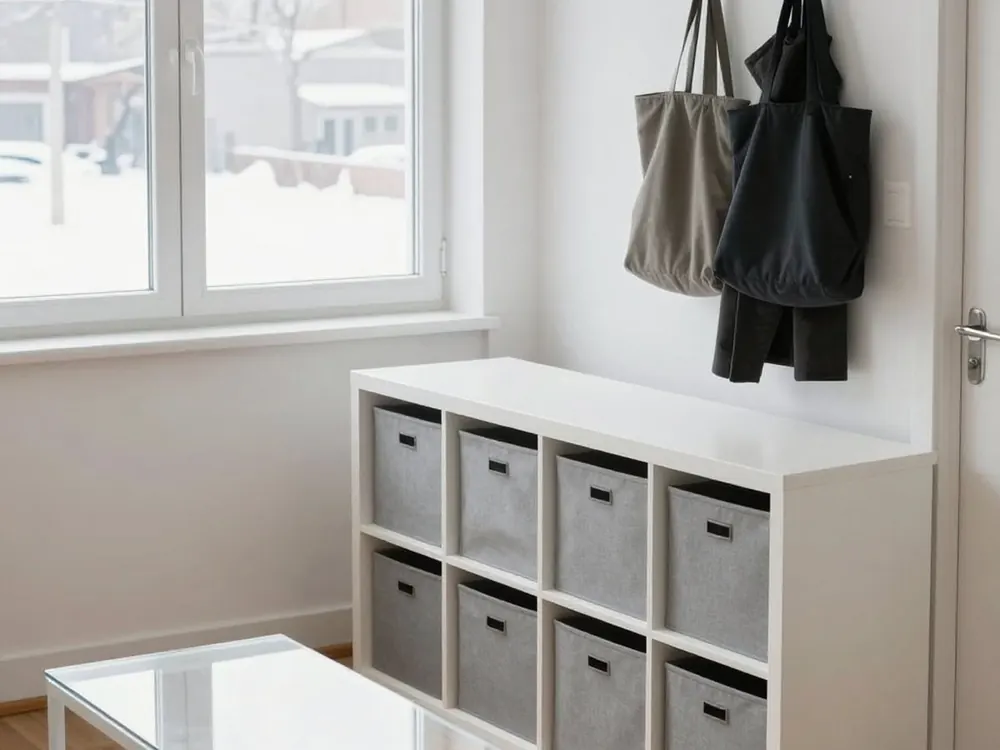
Baskets turn a shelf or the space under a bench into separate zones: one for gloves and hats, one for dog gear, one for sunscreen and bug spray. Use woven baskets for things you grab every day and clear, labeled bins for seasonal items so you can see what's inside. Measure the shelf height and depth before you buy, because baskets that stick out past the edge get kicked. For more ways to keep clutter out of sight, see Hidden Storage Solutions for Studio Apartments: 9 Renter-Safe Buys That Hide the Clutter.
Best for: Hats, gloves and small grab-and-go items that otherwise end up everywhere
Typical price: $20–$45 for a set
How to choose
- Measure the door swing first. Open your front door all the way and measure from its edge to the opposite wall. That's your real depth limit. Anything deeper blocks the door or gets hit by it.
- Adhesive vs. freestanding. Adhesive hooks and strips work best on smooth, painted walls that are clean and dry. Wipe the spot with rubbing alcohol first. They struggle on textured walls, wallpaper, fresh paint (wait about a week) and in humid spots. If your walls are textured, go freestanding or over-the-door.
- Respect weight limits. Every adhesive product lists a maximum weight. Stay well under it for anything you pull on daily, like a bag you yank off the hook every morning.
- Check door thickness and clearance before buying over-the-door products. Also make sure the hooks won't stop the door from closing and latching.
- Think about tipping. Tall, shallow furniture like shoe cabinets and hall trees needs either a wide base or an anti-tip strap. If you can't anchor it, pick shorter pieces.
- Read your lease. Some leases ban adhesive products or limit nail holes. A quick look now avoids an argument at move-out.
- Do a seasonal swap. In spring and fall, move off-season coats and boots to a closet or under-bed bin. Your entry only needs to hold what you're wearing this season.
FAQ
Will adhesive hooks peel paint in my rental?
They can if you remove them wrong. Pull the release tab slowly, straight down along the wall, not outward. Test one in a hidden spot first, and skip them on freshly painted or textured walls.
How do I organize an entryway with no closet?
Use the wall or the door for coats (hooks or an over-the-door rack), the floor for shoes (a narrow rack or slim cabinet), and one small organizer for keys and mail. Store everything off-season somewhere else.
What's the best shoe storage for a really narrow entry?
A tipping-bin shoe cabinet is usually the shallowest closed option at around 7 to 10 inches deep. For open storage, a narrow 2-tier rack tucked behind the door swing is the cheapest fix.