Updated · 6 min read
Small Kitchen Storage Ideas Without Cabinets: 9 Renter-Friendly Buys That Add Real Storage
Product buttons open current options and prices at the shop. Nothing here is sponsored. How we pick.
This guide is for renters in kitchens with one or two upper cabinets, or none at all. Your plates may live on the counter and your pots may be in the oven. The nine picks below are freestanding or close to it, so you can add the storage your landlord didn't give you and take all of it to your next place.
1. Freestanding kitchen pantry cabinet with doors
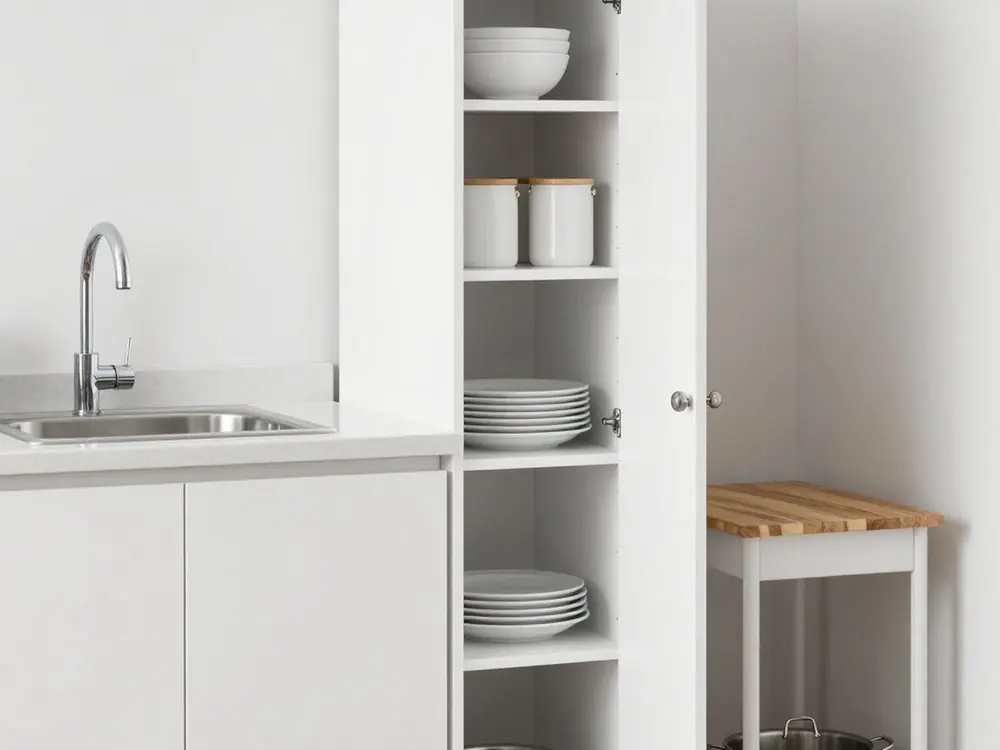
A tall pantry cabinet is the closest thing to a real cabinet without calling a contractor. Look for one about 16 inches deep or less with adjustable shelves, so it fits along a bare wall or at the end of the counter without blocking walkways. Doors hide clutter, which matters when your kitchen is also your living room. Most come with an anti-tip strap. Use it, and ask your landlord about the one small screw hole it needs, because a tipping cabinet full of cans is dangerous.
Best for: Holding dry goods, small appliances and holiday serveware behind closed doors
Typical price: $90–$220
See freestanding pantry cabinets →
2. Bakers rack with microwave shelf
A bakers rack gives you open shelves, a wide microwave shelf and often hooks or a wine rack, all on a footprint of roughly 14 x 30 inches. Moving the microwave off the counter can free up two feet of prep space right away. Choose one with leveling feet, since rental floors are rarely flat. Pick a weight rating per shelf that comfortably covers your microwave, which usually weighs 25–35 pounds.
Best for: Getting the microwave and air fryer off your only counter
Typical price: $60–$150
See bakers racks with microwave shelves →
3. Rolling kitchen island cart with drawers
A rolling island adds counter space and storage in one piece. Look for drawers for utensils, a cabinet or shelf for pots, and towel bars on the side. Locking casters keep it steady while you chop. When you're not using it, you can roll it against the wall or into a closet. In a narrow galley kitchen, keep the cart under about 30 inches wide and leave at least 36 inches of walking room.
Best for: Kitchens with no drawers and no prep space
Typical price: $100–$260
4. Over-the-sink shelf rack
An over-the-sink rack straddles your sink on adjustable legs, which turns the dead air above the faucet into two or three tiers of storage. Most fit sinks from about 24 to 35 inches wide. Measure from countertop edge to countertop edge, and measure the height of your faucet before you buy. Use the top tier for dishes and the lower hooks for sponges, brushes and mugs.
Best for: Drying and storing everyday dishes without a cabinet
Typical price: $35–$80
5. Adhesive pegboard or wall grid panel
Your walls are storage you aren't using yet. Adhesive-mount pegboard panels let you hang utensils, measuring cups, cutting boards and small baskets without drilling. Classic metal wall grids usually need screws, so if you go that route, ask your landlord first and use the smallest anchors you can. For adhesive panels, keep the total load light, clean the wall with rubbing alcohol, and wait the full cure time before you hang anything.
Best for: Utensils, oven mitts and tools you grab daily
Typical price: $25–$60
6. Slim rolling gap cart
Most kitchens have a 5- to 8-inch gap between the fridge and the wall or counter. A slim rolling cart slides into it and holds spices, oils, canned goods or foil and wrap. Measure the gap's width and depth, and leave a little clearance so the cart rolls freely. It's one of the cheapest ways to add a full pantry column.
Best for: Spices, oils and cans in the gap next to the fridge
Typical price: $25–$60
7. Floor-to-ceiling tension pole shelving
Tension pole shelves press between floor and ceiling, so you get tall corner storage with no screws. They work in a corner next to the fridge, beside a window or at the end of a counter run. Check the ceiling-height range before you order, since many cover roughly 7 to 9.5 feet. Keep heavy items on the lower shelves.
Best for: Corners and narrow walls where furniture won't fit
Typical price: $50–$130
8. Over-the-door pantry organizer
If there's a pantry, closet or laundry door anywhere near your kitchen, an over-the-door rack with adjustable baskets can hold about as much as a small cabinet. Look for door hooks that fit your door's thickness, usually 1⅜ to 1¾ inches, and baskets with raised lips so jars don't slide off. Check that the door still closes fully with the hooks on, and add felt pads to the back to prevent scuffs.
Best for: Snacks, spices, baking supplies and wraps
Typical price: $30–$90
See over-the-door organizers →
9. Magnetic fridge-side shelves and spice racks
The side of your refrigerator is a big steel wall. Magnetic shelves hold spices, paper towels, foil and small bottles there, with no adhesive and no holes. Look for strong magnets with a rubber backing so they won't slide or scratch. Keep each shelf's load light, and don't use them on stainless fronts, which are often not magnetic. Test first with a fridge magnet.
Best for: Spices and paper towels when you have no wall space left
Typical price: $15–$40
How to choose
- Measure the floor first. Map out your free wall space with painter's tape before you buy anything tall. Leave room for the oven door, the fridge door and the dishwasher (if you have one) to open all the way.
- Check depth, not just width. Freestanding storage deeper than about 16 inches can make a small kitchen feel cramped. Shallow shelves also keep items from getting lost at the back.
- Read the weight limits. Look at the rating per shelf and the total rating. Appliances, cast iron and canned goods add up fast.
- Adhesive vs. tension vs. screws. Adhesive works for light loads on smooth, clean walls. Tension poles need a solid ceiling and the right height range. Anything that needs screws, including anti-tip kits, is worth a quick email to your landlord.
- Doors vs. open shelves. Use closed storage for visual clutter like bulk snacks and mismatched containers. Use open shelves for things you grab every day.
- Think about the holidays. Holiday cooking means extra pans, platters and baking supplies. Choose pieces with adjustable shelves so they work both in December and in a normal week. For more on this, see Baking Supplies Storage for Small Kitchens: 9 Renter-Safe Buys That Actually Fit and Hosting Thanksgiving in a Small Apartment: 10 Renter-Friendly Buys for Seating, Serving and Fridge Space.
- Make the inside work too. Bins, risers and labeled containers make any shelf hold more. Fall Pantry Restock and Organization Ideas for Renters: 10 No-Drill Buys That Fit Small Kitchens covers how to set up the shelves themselves.
FAQ
Where do I put pots and pans if I have no cabinets?
Try a rolling island with a lower shelf or cabinet, or the bottom shelf of a bakers rack. Nest them by size and stand lids upright in a lid rack. A wall rail with S-hooks is another option if your landlord allows a few screws.
Will a freestanding pantry cabinet tip over?
A tall, narrow cabinet can tip, especially if the top shelves are heavy or a door is pulled hard. Use the included anti-tip strap and keep heavy items low. If you can't anchor it, choose a shorter, wider unit.
What's the cheapest way to add kitchen storage without cabinets?
A slim gap cart and magnetic fridge shelves together usually cost under $80. Between them, they handle spices, oils, cans and paper goods, which are often the items crowding your counter.