Updated · 7 min read
Small Nursery Organization Ideas for Apartments: 9 Renter-Friendly Picks That Fit Tight Spaces
Product buttons open current options and prices at the shop. Nothing here is sponsored. How we pick.
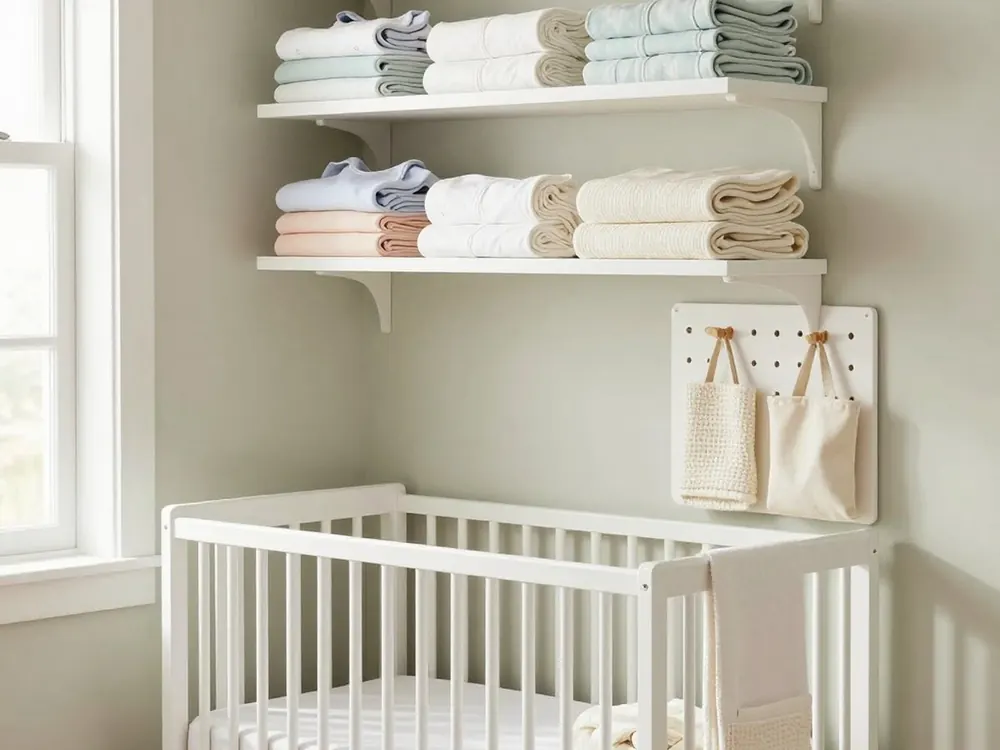
This guide is for parents setting up a nursery in a small apartment, whether that's a spare room the size of a closet, one corner of your own bedroom, or a nook off the living room. These picks give diapers, clothes, and feeding supplies a set place without drilling into walls or adding a lot of furniture. Before you buy anything, measure the space and take photos from a few angles so you only order pieces that will actually fit.
1. 3-Tier Rolling Utility Cart
A slim rolling cart can be your whole diaper station. Put diapers and wipes on the top tier, creams and spare onesies in the middle, and backup supplies on the bottom. During the day it tucks into a corner, and at night you can roll it next to your bed. Most carts are about 16 inches wide by 12 inches deep, so they fit between a crib and a wall where a dresser won't. If you have carpet, choose one with locking casters.
Best for: Parents sharing a bedroom with the baby or changing diapers in more than one room
Typical price: $20–$45
2. Contoured Changing Pad for a Dresser Top
You don't need a separate changing table. Put a contoured changing pad on a low, wide dresser and it does two jobs. Measure the dresser top before you order: most pads are about 32 x 16 inches, and you want the pad to sit fully on the surface with nothing hanging over the edge. Many pads come with a strap that attaches to the back of the dresser. That screws into the furniture, not your wall, so it's safe for a rental.
Best for: Turning a dresser you already own into a changing station
Typical price: $25–$60
See dresser-top changing pads →
3. Expandable Drawer Dividers
Baby clothes are small, and without dividers they end up in a jumble. Spring-loaded dividers press against the inside of the drawer, so you can make lanes for bodysuits, sleepers, socks, and bibs. File-fold the clothes vertically so you can see everything at once when you open the drawer. Measure the inside depth of your drawers first. Most dividers adjust to fit drawers roughly 12 to 22 inches long.
Best for: Small dressers that need to hold a lot of clothes
Typical price: $15–$30 for a set of 4–6
See adjustable drawer dividers →
4. Over-the-Door Organizer with Clear Pockets
An over-the-door organizer uses space you aren't using for anything else. Fill the pockets with socks, mittens, nail clippers, a thermometer, pacifiers, and hair accessories. Clear pockets let you find things in dim light at 3 a.m. Before ordering, check that the hooks fit your door's thickness and that the door still closes all the way. Thin felt pads under the hooks help prevent scuffs.
Best for: Small items you want to grab without opening a drawer
Typical price: $12–$30
See over-door pocket organizers →
5. Hanging Closet Shelf Organizer
If the nursery has a closet, a fabric hanging organizer that attaches to the rod with hook-and-loop straps adds 5 or 6 cubbies without any tools. Use it for folded blankets, swaddles, burp cloths, and the next size up in clothes. Look for one about 12 inches wide so baby hangers still fit beside it. If your closet is shared or tiny, see Small Bedroom Closet Organization Ideas That Work (Renter-Friendly, No Drilling).
Best for: Closets with a rod but no shelves
Typical price: $15–$35
6. Portable Felt Diaper Caddy
This works alongside the cart or replaces it. A diaper caddy with a handle holds about a day's worth of diapers, wipes, cream, and a foldable changing pad. You can carry it to the couch, the bed, or the floor. Keep only what you use every day in the caddy and store backups somewhere else. That keeps it light and easy to restock. Felt caddies fold flat when you're done with diapers.
Best for: Changing diapers anywhere in the apartment
Typical price: $15–$30
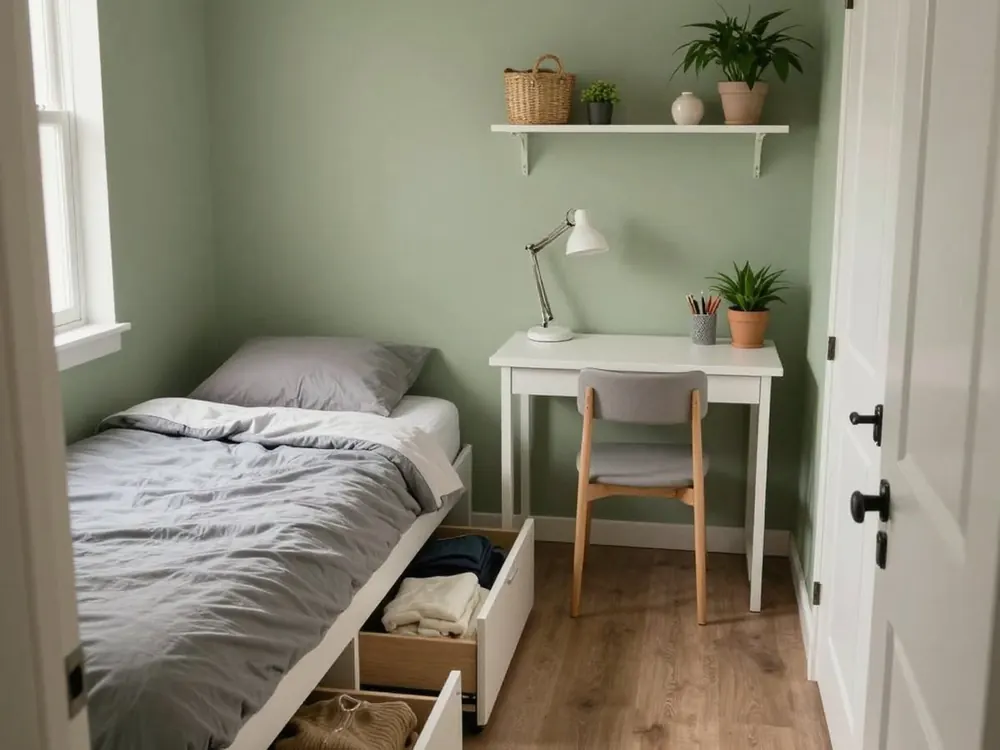
7. Low-Profile Under-Bed Storage Bins
The space under your bed is a good place for bulk diapers, the next clothing size, and hand-me-downs you're saving. Measure the clearance first. Many bed frames have only 6 to 7 inches underneath. If yours is lower, bed risers can add several inches. Zippered fabric bins with clear tops let you check what's inside without pulling them all out. Don't store anything under the crib if its mattress is set to the lowest position, since there usually isn't enough room. For more on rotating outgrown sizes, see Seasonal Clothing Storage Ideas for Small Closets.
Best for: Backup supplies and clothes the baby hasn't grown into yet
Typical price: $20–$45 for a 2-pack
8. Storage Ottoman for the Feeding Spot
You'll spend a lot of hours in one chair. A storage ottoman beside it gives you a footrest, a seat for a visitor, and hidden storage for nursing pillows, spare blankets, and burp cloths. A cube about 15 to 17 inches fits next to most chairs or gliders. Pick a hinged lid with a slow-close or soft-stop feature so it won't slam on small fingers later.
Best for: Feeding corners where you don't have room for a side table
Typical price: $35–$90
9. Low Cube Organizer with Fabric Bins
A 2x2 or 2x3 cube unit gives you open storage at floor level without a tall piece that could tip over. Put fabric bins in the cubes for toys, books, and spare bedding, and label each bin so a partner or babysitter can find things. Most 2x2 units are around 30 inches square and 12 inches deep. Wall anchors require drilling, so check your lease or ask your landlord before using the included kit. A low unit is a safer choice than a tall bookcase in any case. For setups where siblings share a room, see How to Organize a Shared Kids Bedroom in a Small Space.
Best for: Toys, books, and bulky items as your baby grows
Typical price: $35–$70 for the unit, $20–$35 for a 6-pack of bins
How to choose
- Measure three things: the floor footprint, the clearance under your bed, and the depth of your dresser top. Most returns happen because something was a couple of inches off.
- Keep the crib area clear. Don't hang shelves, hanging organizers, or adhesive hooks above or within reach of the crib. Once a baby can pull up to standing, those items are within reach.
- Plan for tip-over risk. Tall dressers and bookcases should be anchored to the wall. If your lease doesn't allow small screw holes, ask your landlord, or buy low, wide furniture instead.
- Adhesive vs. tension vs. freestanding. Adhesive hooks are fine for light items like a diaper bag on the far side of the room. Tension rods and over-door pieces don't leave marks. Freestanding pieces like carts and cubes are the most flexible when you move.
- Check weight limits. A large box of diapers can weigh 10 pounds or more. Store it on the floor or a low shelf, not in a fabric hanging organizer.
- Keep the colors simple. If your bins and baskets match (white, gray, or one accent color), a small room looks much less cluttered.
- Buy fewer clothes. You'll outgrow newborn sizes within weeks. One to two weeks' worth of outfits is enough if you do laundry regularly.
If the baby is sharing a room that has no closet, How to Organize a Bedroom With No Closet covers freestanding wardrobe options that work for adults and babies.
FAQ
Can I set up a nursery in my own bedroom?
Yes. Keep baby items in one zone so they don't spread around the room. A rolling cart, a dresser with a changing pad, and under-bed bins can hold nearly everything. A room divider or a different rug can help mark the space visually.
Do I really need a changing table?
No. A contoured changing pad on a sturdy, low dresser does the same job and saves floor space. A portable caddy with a fold-up pad also works on a bed or the floor. Keep one hand on your baby whenever they're on a raised surface.
How do I organize a nursery without damaging the walls?
Use freestanding furniture, over-door organizers, closet-rod hanging shelves, tension rods, and under-bed storage. The one exception is anchoring tall furniture against tip-over. Talk to your landlord about that instead of skipping it, or choose low pieces that don't need anchors.