Updated · 6 min read
How to Organize a Small Fridge for Maximum Space: 9 Renter-Friendly Buys That Actually Fit
Product buttons open current options and prices at the shop. Nothing here is sponsored. How we pick.
If you have an apartment-size fridge, a dorm mini fridge, or a hand-me-down unit your landlord won't replace, this guide is for you. Below are nine cheap organizers that turn awkward shelves into usable space, plus a shelf-by-shelf plan so food stops getting buried and going bad. None of them need tools, and nothing on this list will cost you your deposit.
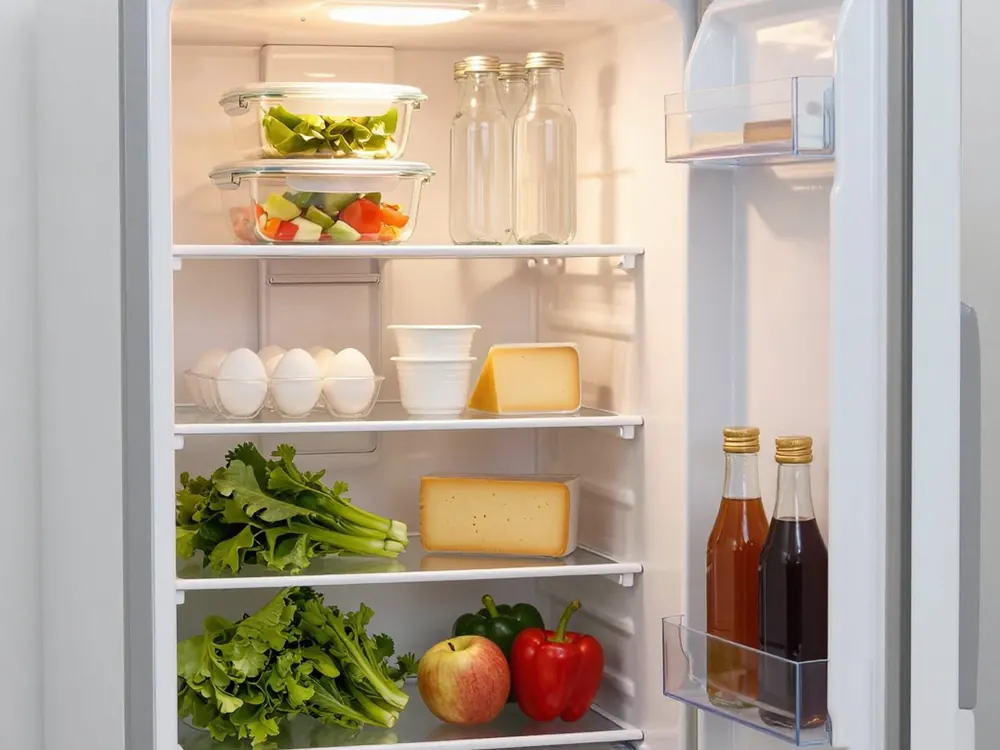
First, a quick zone plan to use with these products:
- Top shelf: Leftovers, drinks, and ready-to-eat food you grab often.
- Middle and lower shelves: These stay at the steadiest cold temperature. Put milk, eggs, and dairy here.
- Bottom shelf: Raw meat goes here, in a bin, so nothing drips onto other food.
- Crisper drawers: Produce. Keep fruit and vegetables apart, because many fruits give off ethylene gas that makes vegetables spoil faster.
- Door: This is the warmest spot because the door opens constantly. Keep condiments, sauces, and butter here. Don't store milk or eggs in the door.
1. Clear Stackable Fridge Bins
Clear, open-front bins are the base of an organized small fridge. They turn deep shelves into drawers you can pull out, so the yogurt at the back stops expiring where you can't see it. Look for slim bins about 4 to 6 inches wide that you can put side by side, and keep taller bins at the back and shorter ones up front so you can see everything. Bins with built-in handles make it easy to slide them out of a cramped mini fridge.
Best for: Deep shelves where food gets lost at the back
Typical price: $20–$35 for a set of 4–8
2. Shelf Riser for Fridge
Most small fridges have tall gaps between shelves that go to waste. A clear acrylic or coated-wire riser adds a second level, so you can keep yogurt cups or deli containers underneath and lighter items on top. Measure the height between your shelves first. You want at least 2 inches of space above the riser so you can still reach in.
Best for: Fridges with only two or three fixed shelves
Typical price: $12–$25
3. Turntable (Lazy Susan) for Condiments
A 9- to 11-inch turntable keeps jars from piling up in the back corner. Spin it and the hot sauce comes to you, so you don't have to move six bottles to find it. Choose one with a raised edge so bottles don't slide off, and measure your shelf depth before you buy. Many mini-fridge shelves are only 12 to 14 inches deep.
Best for: Corner storage of jars, sauces, and small condiments
Typical price: $10–$20
4. Lidded Egg Holder
The carton isn't the problem. Eggs end up in the door, which is too warm for them. A clear, stackable egg bin with a lid lets you keep eggs on a middle shelf and stack something light on top, which a floppy carton won't allow. An 18-egg size usually fits a standard apartment fridge. In a dorm fridge, go with a 12-egg size.
Best for: Getting eggs out of the door and into the cold zone
Typical price: $10–$18
5. Can Dispenser Rack
Loose cans of soda or seltzer take up a whole shelf in a small fridge. A clear, roll-down dispenser holds about 9 to 12 cans in a narrow lane, and when you take one from the front, the next one rolls forward. Check the depth before you order. Some dispensers are 13 to 14 inches long and won't let a mini-fridge door close.
Best for: Drink lovers with a tiny fridge or dorm unit
Typical price: $12–$25 for a set of two
6. Produce Saver Containers
Produce wilts quickly in small fridges because the crisper drawers are packed and air can't circulate. Produce keepers with an adjustable vent and a removable bottom tray (or a raised insert) keep berries and greens off their own moisture. For leafy greens, line the container with a dry paper towel and swap it out when it gets damp.
Best for: Berries, herbs, and salad greens that spoil in two days
Typical price: $15–$30 for a set of 3
7. Washable Fridge Shelf Liners
Liners are the deposit-saver on this list. Washable EVA or silicone mats catch spills, so you don't end up scrubbing sticky residue off the landlord's glass shelves at move-out. Most come in rolls or packs that you trim with scissors. Pick clear or white so you can see spills, then pull the mat out, rinse it in the sink, and put it back.
Best for: Renters protecting original shelves and crisper drawers
Typical price: $8–$15 for a multi-pack
8. Matching Rectangular Leftover Containers
Round containers waste space in corners. Rectangular glass or plastic containers that all share the same footprint stack neatly in one leftover zone. Pick one shelf or one bin for leftovers only, label everything, and throw out anything older than 3 to 4 days during a weekly check. If your container cabinet is already overflowing, start with our Food Container and Tupperware Organization Ideas.
Best for: Meal preppers and anyone who loses track of leftovers
Typical price: $20–$40 for a 10-piece set
See stackable leftover containers →
9. Freezer Bins and a Label Kit
Small freezers turn into a pile of frozen bags fast. Narrow freezer-safe bins let you store bags upright, like files in a drawer, so you can read every label without digging. Add a dry-erase marker or removable labels so you can write what's inside and the date on bins and containers. That small habit ends mystery leftovers in both the fridge and the freezer.
Best for: Top-freezer apartment units and mini-fridge freezer compartments
Typical price: $15–$30 for bins; $6–$12 for markers and labels
How to choose
- Measure three times. For each shelf, record the width, the depth (from the back wall to where the door closes), and the clearance height. Door bins and shelf brackets stick out more than you'd expect, especially in mini fridges.
- Check the door depth. Door shelves in compact fridges are often only 3 to 4 inches deep. Don't buy door organizers until you've measured them.
- Skip anything that sticks to the walls. Adhesive hooks and stick-on caddies don't hold up to cold and moisture, and they can leave residue that a landlord will notice. Freestanding bins and risers are the renter-safe choice.
- Watch weight on glass shelves. A filled can dispenser or a stack of glass containers gets heavy. Put the heaviest items on the bottom shelf, especially in older fridges with thin shelves or plastic brackets.
- Leave air gaps. Fridges need airflow to stay cold. Don't push bins tight against the back wall or block the vents, which are usually on the back wall near the top.
- Buy in phases. Start with clear bins and liners. After a week, see where things still pile up before you buy more.
For more ways to stretch a small kitchen, see Small Apartment Kitchen Organization on a Budget: 17 Solutions That Actually Work and Meal Prep Organization for Small Kitchens.
FAQ
Do fridge organizers actually save space, or just make it look nicer?
They save space when they use height you're currently wasting, like risers, stacked egg holders, and can dispensers. Bins mostly help you see and reach things. That still saves money, because you stop buying duplicates of food that's hiding in the back.
How long do leftovers last in the fridge?
Most cooked leftovers keep for 3 to 4 days in airtight containers at 40°F or below. Write the date on everything, and when in doubt, throw it out.
How do I keep a small fridge from smelling?
Keep an open box of baking soda on a shelf and replace it every three months. Wipe up spills right away (liners make this easy), clear out old leftovers weekly, and keep the fridge at 40°F or below.