Updated · 7 min read
Meal Prep Organization for Small Kitchens: 10 Renter-Safe Buys That Actually Fit
Product buttons open current options and prices at the shop. Nothing here is sponsored. How we pick.
This guide is for anyone meal prepping in a studio, dorm, or galley kitchen where five containers of chopped vegetables can fill the whole fridge. The picks below help you store, freeze, and assemble a week of food without drilling, without losing your counter, and without a cabinet full of mismatched lids.
1. Stackable rectangular meal prep containers
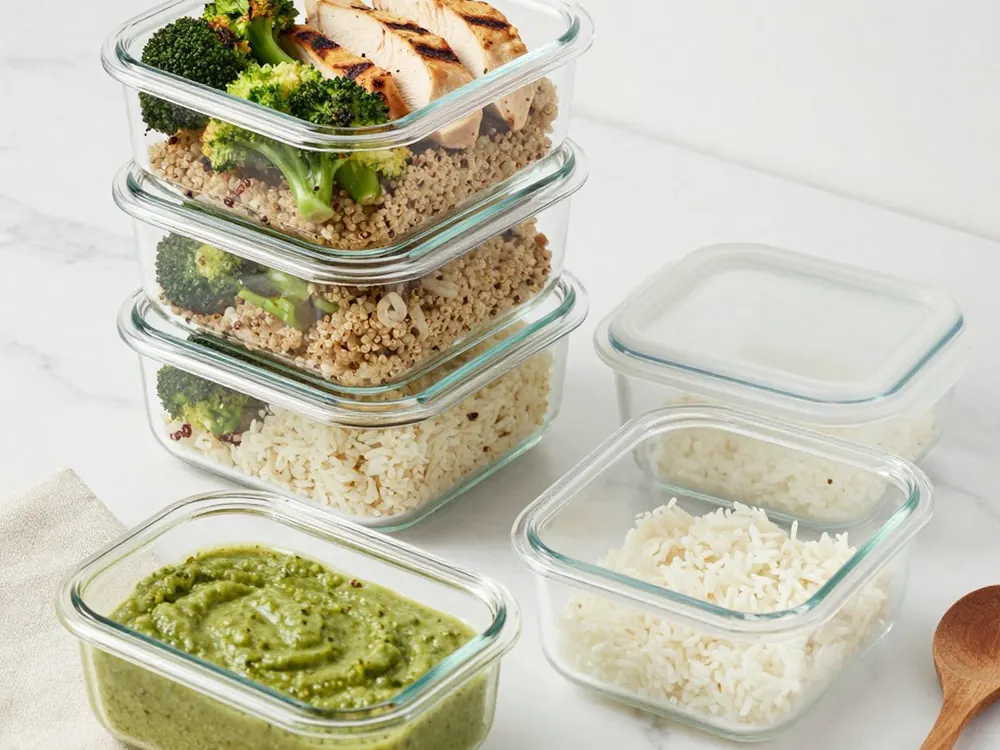
Square and rectangular containers sit flush against each other and against fridge walls, so they waste less space than round ones. Buy one matching system in three sizes: about 2 cups for sauces and snacks, 3–4 cups for single meals, and 8 cups or more for bulk proteins and grains. Rubbermaid Brilliance is a widely sold option with clear, stackable bodies and lids that snap on. If you'd rather not deal with glass in a tiny space, BPA-free plastic sets weigh less and nest more tightly when empty. Before you buy, measure the depth of your fridge shelf so a full row fits with the door closed.
Best for: Building one container system that stacks in the fridge and nests in the cabinet
Typical price: $25–$50 for a set
See stackable meal prep containers →
2. Lid and container organizer for cabinets
The real problem in a small kitchen is usually the lids. An expandable lid rack or a divided container bin stands lids upright like files, so you can grab the right size without everything sliding out. Most fit inside a standard 12-inch-deep upper cabinet or a deep drawer, and they don't need screws. For more ways to tame the pile, see Food Container and Tupperware Organization Ideas: 9 Renter-Safe Buys That End the Lid Avalanche.
Best for: Cabinets where every opening ends with a lid avalanche
Typical price: $15–$30
3. Clear stackable fridge bins
Clear bins turn one fridge shelf into labeled zones for proteins, chopped vegetables, and ready-to-eat meals. You can pull a whole bin out to reach the back without moving everything else, and spills stay in the bin instead of reaching the shelf. Narrow bins about 4 inches wide work well in apartment fridges because two or three fit side by side on a 24-inch-wide shelf. mDesign sells many sizes of clear fridge bins on Amazon.
Best for: Making one eye-level fridge shelf your dedicated meal prep zone
Typical price: $20–$40 for a set of 4–6
4. Silicone freezer portion trays
Freezing soup, chili, broth, rice, or pesto in fixed portions means you thaw only what you'll eat, which matters when your fridge has room for just two or three days of food. Souper Cubes are a well-known brand with lids and fill lines. Generic silicone trays with lids are cheaper. Once the portions are frozen solid, pop them out into a freezer bag so the tray is free for the next batch.
Best for: Small fridges that can't hold a full week of prepped food
Typical price: $12–$25 per tray
5. Freezer bag holders and vertical freezer bins
If you freeze soups or marinated chicken flat in zip-top bags, you can stand them on their edges like files and see every label without digging. A slim, open-top freezer bin keeps that row from tipping over. Bag holder stands also help while you fill, so you aren't trying to pour chili one-handed on a 2-foot counter. Before buying a bin, measure your freezer's interior height, since apartment top-freezers are often under 12 inches tall.
Best for: Top-freezer fridges where everything gets buried
Typical price: $12–$25
6. Expandable cabinet shelf risers
A riser gives one cabinet shelf two levels, with canned goods, spices, or empty containers on top and pots or bulk grains below. Expandable versions adjust to your cabinet width, and none of them need tools. Look for models that fold down or come apart in case your next apartment has different cabinets. For more cabinet layouts, see How to Organize Kitchen Cabinets in a Small Kitchen: 10 Renter-Safe Buys That Actually Fit.
Best for: Doubling the usable space in one pantry or upper cabinet
Typical price: $15–$35
7. Airtight stackable dry-goods containers
Rice, oats, lentils, and pasta are the base of most meal prep, and half-open bags take up more room than they should. Square airtight canisters stack, keep pests out, and show you at a glance when you're running low before your shopping trip. Mason jars look nice, but square plastic canisters fit more food on the same shelf.
Best for: Keeping meal prep staples visible, fresh, and stackable
Typical price: $25–$45 for a set
See airtight pantry containers →
8. Over-the-door pantry organizer
The back of a pantry or closet door is usually empty space. An over-the-door rack with adjustable baskets can hold spices, oils, vinegars, wraps, and spare lids, and it hangs on hooks without screws. Check that the door closes with the hooks on, and measure the depth between the door and the shelves inside so the baskets don't hit anything.
Best for: Kitchens with a pantry or nearby closet door
Typical price: $25–$60
See over-the-door organizers →
9. Over-the-sink roll-up drying rack or cutting board
When your prep space is about 18 inches of counter, the sink area becomes extra workspace. A roll-up rack spans the sink, so you can rinse produce, drain cooked pasta, or set hot pans on it, then roll it into a drawer when you're done. An over-the-sink cutting board with a colander does the same job for chopping. Measure your sink's inside width and its outer rim before you buy.
Best for: Kitchens with almost no counter space
Typical price: $15–$35
10. Removable food labels and dry-erase markers
Writing the date on every container means you don't have to rely on the sniff test, and you'll eat the oldest food first. Dissolvable or removable labels come off in the dishwasher, and dry-erase or chalk markers write directly on glass and plastic. If you share a fridge, use painter's tape to label your shelf. It peels off without leaving residue.
Best for: Shared fridges and anyone who forgets what's in the back
Typical price: $6–$15
How to choose
- Measure the fridge first. Write down the shelf width, shelf depth, and the height between shelves. Then pick container heights that fit two stacked with the door closed. For a full shelf-by-shelf plan, see How to Organize a Small Fridge for Maximum Space: 9 Renter-Friendly Buys That Actually Fit.
- Stick to one container line. Mixing brands is how lids stop fitting. Choose one system in two or three sizes and add to it later.
- Glass or plastic? Glass goes straight from fridge to microwave and doesn't stain, but it's heavy and takes up more room when empty. Plastic nests better, which helps in a dorm or studio.
- Use tension and hooks instead of adhesive and screws. Over-the-door hooks, expandable risers, and freestanding bins all leave with you when you move. Strong adhesive can peel paint or cabinet laminate, which can cost you part of your deposit.
- Check weight limits. Over-the-door racks often list a per-basket limit. Put heavy bottles at the bottom and light packets higher up.
- Check clearances. Over-the-door racks need room between the door and the shelves behind it. Under-sink and riser picks need you to work around pipes and the cabinet face frame, so measure the actual opening, not just the interior.
- Plan for 4–5 days. Small fridges can't hold two weeks of food. Prep 4–5 days of meals and freeze the rest in portions.
- Keep prep tools together. Put containers, labels, measuring cups, and a kitchen scale on one shelf or bin so your counter stays clear for cooking.
FAQ
How long do prepped meals last in the fridge?
Most cooked meals keep 3–4 days at 40°F or below. Raw chopped vegetables usually last a bit longer than cooked proteins. If you won't eat something by day four, freeze it on prep day instead of waiting.
What container size is best for a small fridge?
For single meals, a 3–4 cup rectangular container is the most versatile size. Add a few small ones for sauces and one or two large ones for bulk grains or proteins. Keep sauces separate so your food doesn't get soggy.
Can I meal prep if my kitchen has almost no storage?
Yes. Freeze individual portions and thaw one or two days' worth at a time, and use vertical space with risers and over-the-door racks. Under-bed bins can hold extra containers and shelf-stable staples. For more budget ideas, see Small Apartment Kitchen Organization on a Budget: 17 Solutions That Actually Work.